Is the Big Island Safe for Tourists?

Is the Big Island safe for tourists, you ask?
Short Answer: YES! The Big Island is perfectly safe for tourists and is NOT dangerous!
At least, not any more dangerous than walking out your own front door.
Of course, life itself comes with risks, and using common sense goes a long way.
Having lived on the Big Island, I can tell you it’s not dangerous for the average visitor: there are no poisonous animals or large predators, the main roads are well maintained, and help is never far away.
So let’s go through some of the things that might seem risky, like volcanoes and ocean hazards, and clear up any misconceptions before you book your trip to Hawaii’s largest island.
Erupting Volcano

The biggest concern I see that tourists have is visiting the Big Island during a volcanic eruption.
Let me assure you, that 99.9% of the eruptions (made-up statistic) happen at Kilauea in Hawaii Volcanoes National Park and is currently safely contained inside a caldera. Even safe enough for viewing!
It is a flowing lava kind of eruption, not atomic-bomb ash clouds. You don’t have to worry about Pompeii 2.0.
Airplanes still fly on and off the island without interruption and the volcano is no where near the main resorts.
However, respect the roped off areas, they are there for a reason. People have fallen into the crater trying to “get a better look” and died.
Also, anytime you are walking over hardened lava, especially in “unchartered territory”, you run the risk of breaking through and falling into a lava tube, underground fire, steam vent, passing through a deadly gaseous section, or just plain cutting yourself on the sharp rocks.
Another thing to note is that the Big Island is made up of 4 active volcanoes, so technically any of them could erupt at any moment, but not very likely.
Before the lava gets you though, you’ll probably be affected by the vog instead…
Vog

While big cities deal with smog, the Big Island deals with vog: volcanic smog.
When Kilauea is erupting, sometimes gaseous smoke made up of sulfuric dioxide (SO2) gets carried by tradewinds and creates a hazy blanket around the island, mostly on the Kona side.
You’ll know it’s vog when the ocean horizon is indistinguishable due to a brownish haze.
Hawaii Volcanoes National Park has been known for restricting areas with a high concentration of volcanic emissions that are too dangerous. But in general, the air quality is safe for visiting the park.
Some people are extremely sensitive to the vog, especially those with asthma or heart conditions. Older people, children, and pregnant women could also be affected.
Possible symptoms that could occur are:
- Headache
- Nausea
- Shortness of breath
- Fatigue
- Coughing
- Eye/nose/throat irritation
Hospitalization from vog symptoms can occur, but not often enough that it should scare you away.
If you’re concerned, you can track air quality here.
The other air quality scenario on the Big Island to be aware of is altitude sickness…
Join thousands of other visitors and locals to discover the best things to do on the Big Island!
🌺 New activities posted daily
🌺 Upcoming events not to miss
🌺 Ask questions about your trip
Altitude Sickness
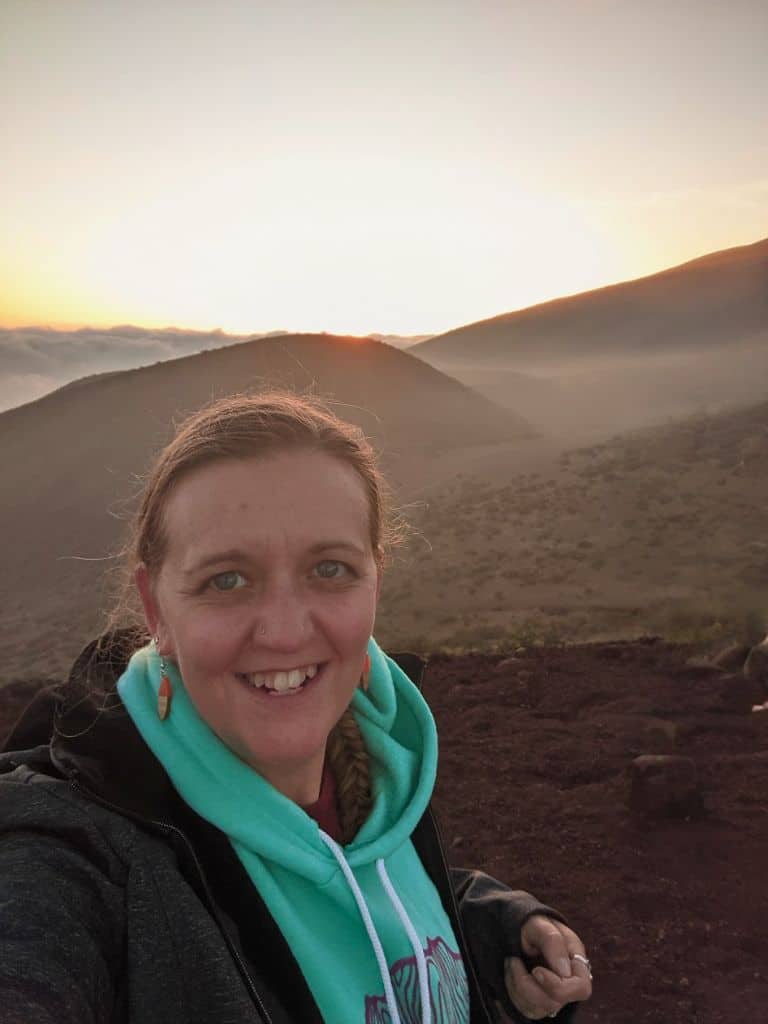
Driving up to Mauna Kea for sunset and stargazing is a popular pastime for visitors.
As soon as you turn onto Mauna Kea Access Road you’ll see a giant cautionary sign reading:
“altitude sickness can be fatal
travel to summit at your own risk
no medical services on mountain”
– big yellow sign on Mauna Kea Access Rd
The Onizuka Center for International Astronomy Visitor Center is as high as you can go without 4WD at 9,300ft. If you continue on in your Jeep or 4WD you can reach the summit at 13,800ft.
If you’re coming from sea level and immediately reach those altitudes in just a couple of hours you may very realistically experience altitude sickness.
I’m a healthy, young(ish) individual and am still not immune to the ailment.
After 20min of being up at the 9,000ft area, I begin to feel dizzy and nauseous. I’m at least aware of what was causes my symptoms and make extra care to not exert myself. As soon as I get back down the mountain though, I’m fine.
Going up to Mauna Kea is not recommended for people with heart problems or respiratory problems, children under 16yrs old, or pregnant women.
If you go to the summit, you are required to wait at least 30 minutes to acclimate to the elevation at the Visitor Center.
A driving situation to be aware of if you go to the summit in your 4×4 is coming down the mountain. You will need to put it in low gear so you don’t burn the brakes.
But driving Mauna Kea will be the least of your car troubles…
Car Crime

Car crimes do happen on the Big Island, but statistically way less than any major US city.
Just use common sense and don’t leave valuables laying out in the car, taking important things like wallets and keys with you.
Every guidebook will tell you to leave your car unlocked, assuming thieves will test the car door first before breaking a window. If there’s nothing to steal inside, they’ll move on.
I understand that this can get tricky when you are sightseeing with luggage in the car, it’s just a risk you’ll have to take.
You can take precautions though:
- Park in heavier trafficked, well-lit areas when you can
- Store luggage at your hotel front desk or try Bounce for other luggage storage options
I’ve heard of making your rental car look like a local’s with rolled down windows, puka shells on the rearview window, and a decoration car magnet but I cannot confirm if it helps.
Besides break-ins, gas siphoning is also a known car crime. If you are parking in an area that locals deem they “own”, especially at hidden beaches, they have been known to take advantage of unsuspecting visitors.
You’ll notice broken down vehicles along the road that have been stripped for parts. You do not want to abandon a car if it breaks down as these thefts happen fast; usually by the next day a car will be missing some, if not all, of its major pieces.
Again, these are things that can happen but not every visitor is a victim.
What might get you are the curvy, dark roads…
Road Conditions
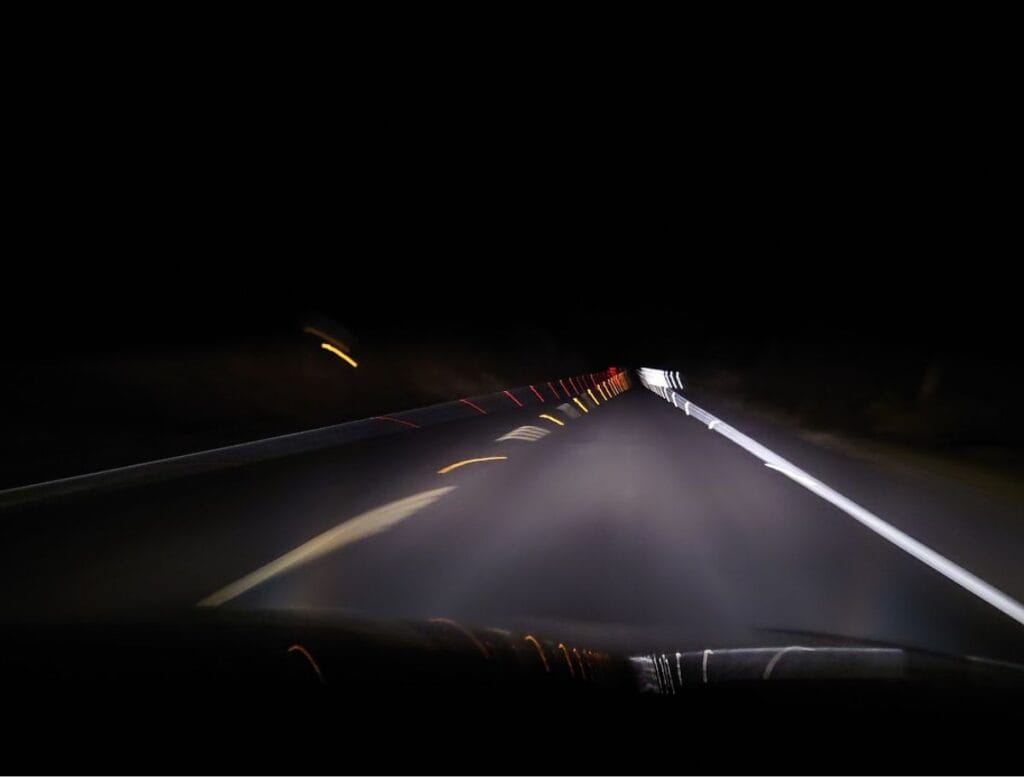
“Don’t drive on the Big Island at night.” – your mom or concerned friend
Have you heard of this warning?
Main roads are maintained surprisingly well. You don’t need four-wheel drive to drive around the island.
There is only one major highway that circumferences the island which has potential to wear out fast. But they keep it up; probably because it IS the only road around the island.
The “dangerous” part comes from the darkness on the Big Island at night or during the curvy section through the Kona Coffee Belt.
Most driving just requires common precautions.
Dark Roads
To keep light pollution to a minimum for the telescopes up on Mauna Kea, most roads DO NOT have street lights.
When there are street lights, they are low wattage yellow street lights, but only in the highest populated sections.
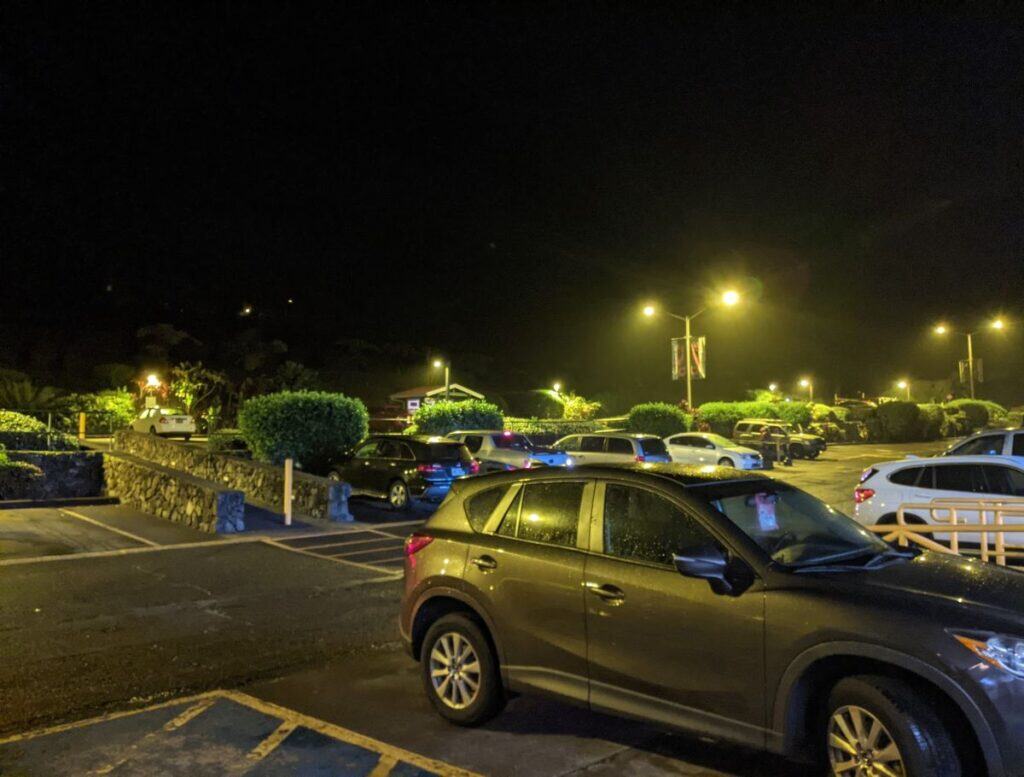
This makes for some very dark roads (but that’s what headlights are for!).
However, to compensate for the lack of street lights, the traffic lanes are lined with extra bright reflector markers that can illuminate at least a quarter mile ahead.
Because the reflectors are so bright, I usually forget that there aren’t street lights.
The hardest part is when you’re looking for street signs. Hopefully you have enough cell reception for Google maps to help you along.
Pedestrians will often walk along the narrow shoulders on the highway at night. Without street lights you often won’t see them until you are nearly on top of them, so I always make it a rule not to ride the shoulders, especially around curves.
Curvy Roads
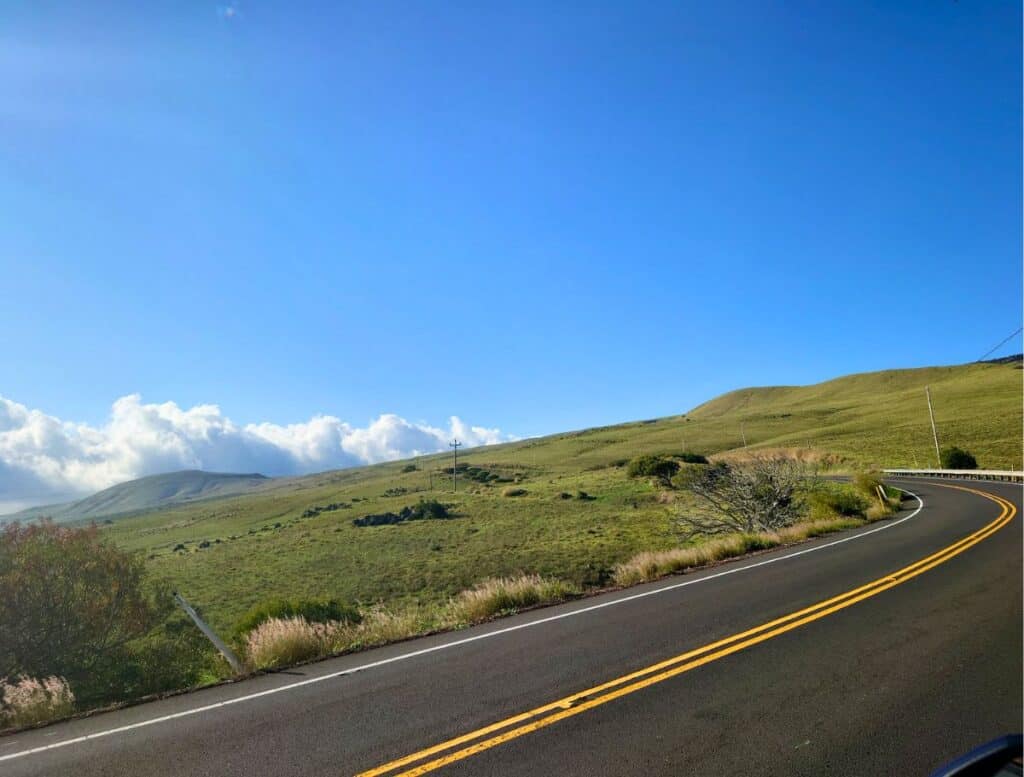
The curviest section of road on the Big Island is arguably on Hwy 11 from about mile marker 90-110 or so.
Head-on collisions are not uncommon in this section.
Just take the curves at a safe speed, not worrying about the car riding your tail, and keep your eyes peeled for wild pigs…
Wildlife
Pigs
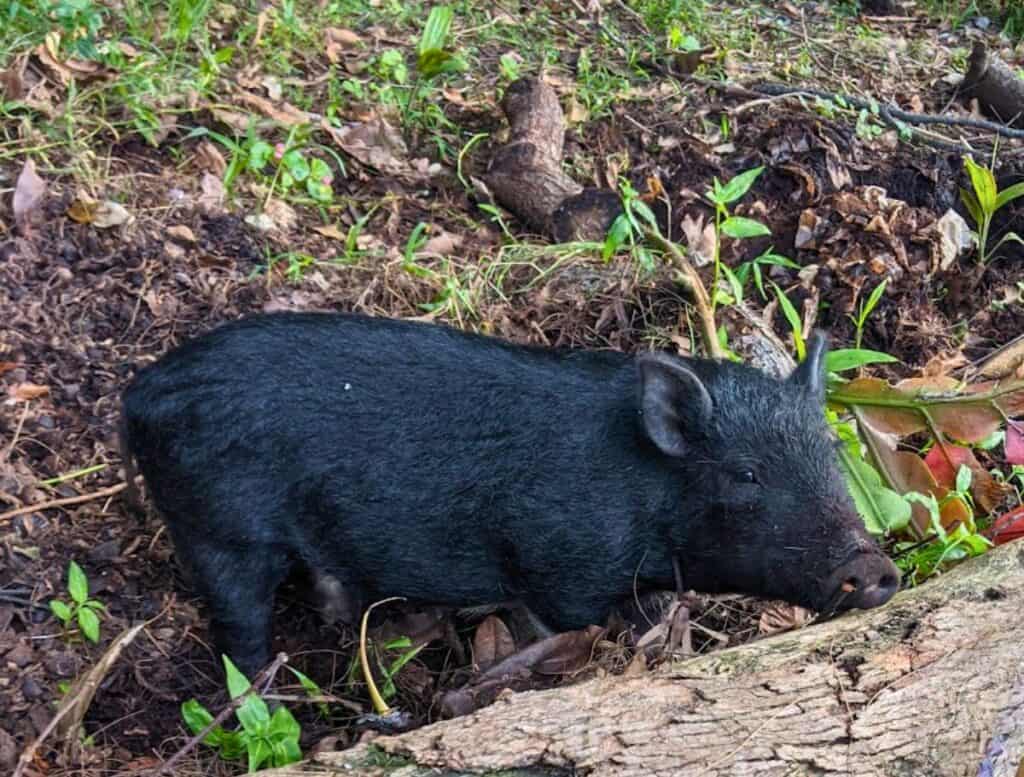
Feral pigs run rampant on the Big Island. You will undoubtedly see them grazing in the foliage or as a carcass along the highway.
These are probably the scariest wildlife to deal with on the island, but again, not a huge deal.
While driving you’ll need to keep an eye out for hogs (and goats) jutting across the road unexpectedly. But then again, there’s always some sort of wildlife threat on the road, no matter where in the world you are.
Pigs can also get aggressive on hiking trails, or even out surfing. Most of the time they will just false charge you, but bites and goring is not out of the question.
Centipedes
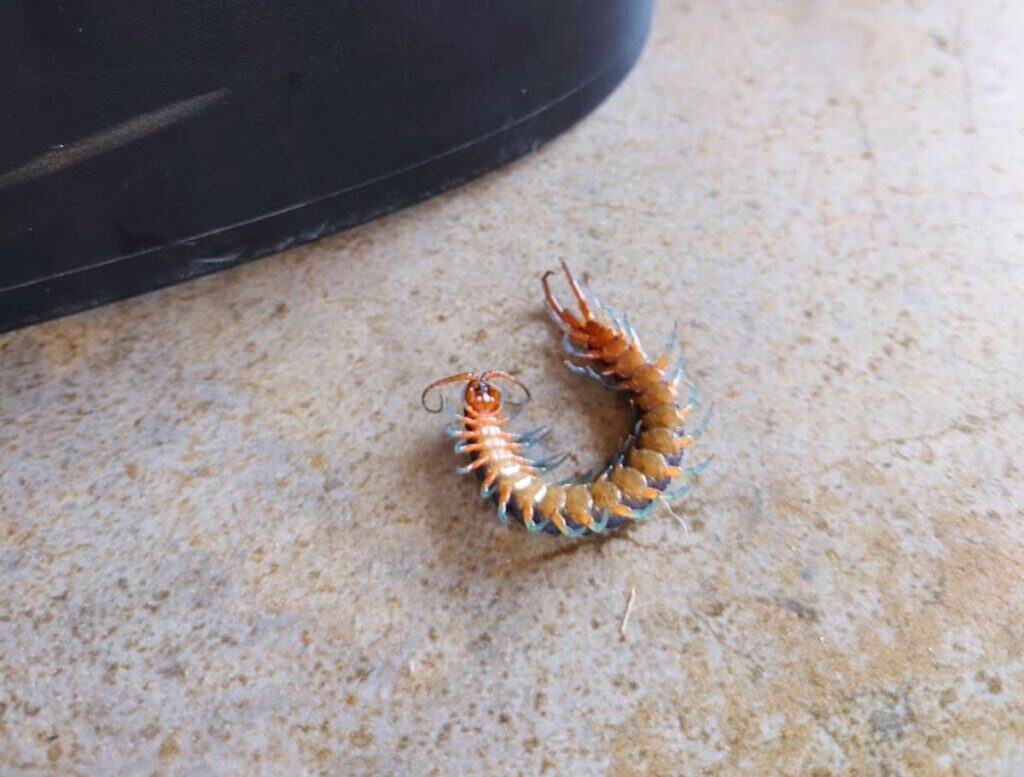
Hawaii doesn’t have any poisonous animals or insects but they do have centipedes.
Resorts do a good job keeping pests away (though it’s never a guarantee), but if you are renting an Airbnb, nature can easily seep through the cracks.
Centipedes come in small to alarmingly large sizes and their bites can sting! While it won’t send you to the hospital, think of them as a massive bee sting.
They mostly hang out under rocks, wood, and leaves but if they come inside they are looking for warm moisture like the bathroom or kitchen.
I make it a rule to never walk in the dark barefoot without using my phone’s flashlight, just in case.
If you do get bit by a centipede, the best thing to do is use a cold compress and take some aspirin.
Sea Urchins
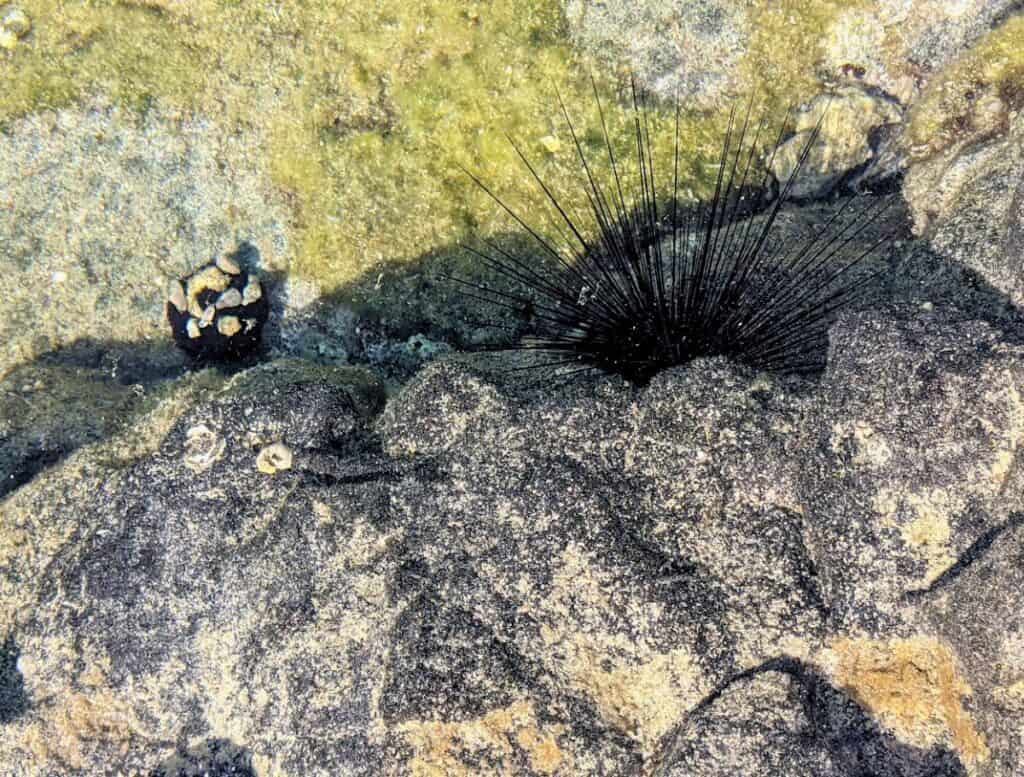
You’ll most definitely see sea urchins while snorkeling or tidepooling. These spikey invertebrate aren’t no Koosh balls. Their spikes can sting you and ruin a vacation if you aren’t careful.
They like to hide in coral and lava rock crevasses, not really out in the open sand where you typically walk.
If you slip while walking along the shallow lava tidepools, grab a lava rock to lift yourself out of the water, or accidentally step on coral while snorkeling (which you shouldn’t do!), you could easily get poked.
When you get stung by a sea urchin, the spine will break off from the body. While there will be initial hurt from the sting, the real pain comes from the splintered pieces of barbed spine that are stuck under your skin with no way of getting them out except to wait it out, soak it, or surgery.
Sharks
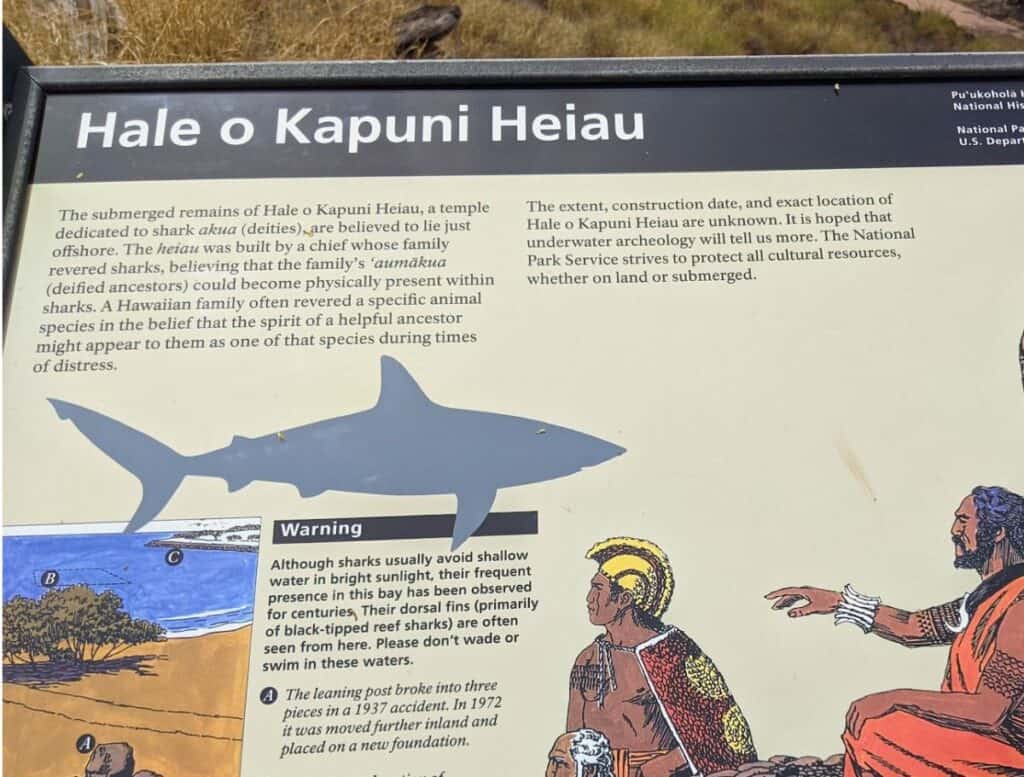
Now I’m not trying to get all Jaws and Bethany Hamilton on you, but I’d be lying if I didn’t say that sharks aren’t something to be cautious of.
Some sharks are more docile than others like the reef tip shark, while tiger sharks are known to be more aggressive towards humans.
If you want a comforting statistic, you have a better chance of dying from a falling coconut that by a shark attack. About 150 people worldwide die by coconut a year while only about 10 people die by shark. Does that help, or just make you afraid of coconuts now?!
But there are other precautions to take in the ocean…
Swimming in the Ocean
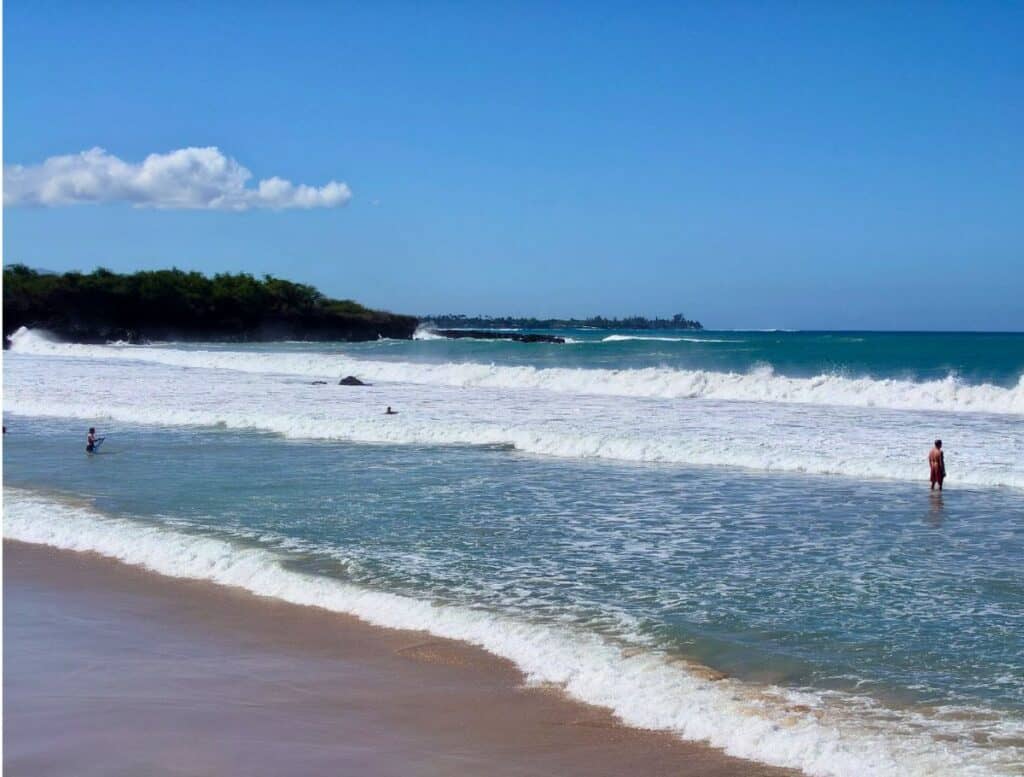
“Never turn your back on the ocean.” – Duke Kahanamoku (sorta)
Besides wildlife in the water that can harm you, the ocean itself can be dangerous. Waves and currents are no joke and should be taken seriously.
Lifeguarded beaches are good about keeping people safe from dangerous water conditions, but ultimately it’s up to YOU to make smart judgment choices when entering the wild water.
Waves

Waves crashing on sandy shores look enticing but can be harmful.
Many people have been joyfully frollicking amongst the waves one minute and the next minute pulled under or slammed into the shore by “the big one”.
Joint sprains, spinal injuries, or death CAN and DO happen.
Rip Currents

Rip currents can also be dangerous, pulling you out to sea with little you can do about it.
A rip current is a narrow, strong, river-like current from shore that cuts through the surfzone and eventually deposits 200-2,500ft out into the ocean.
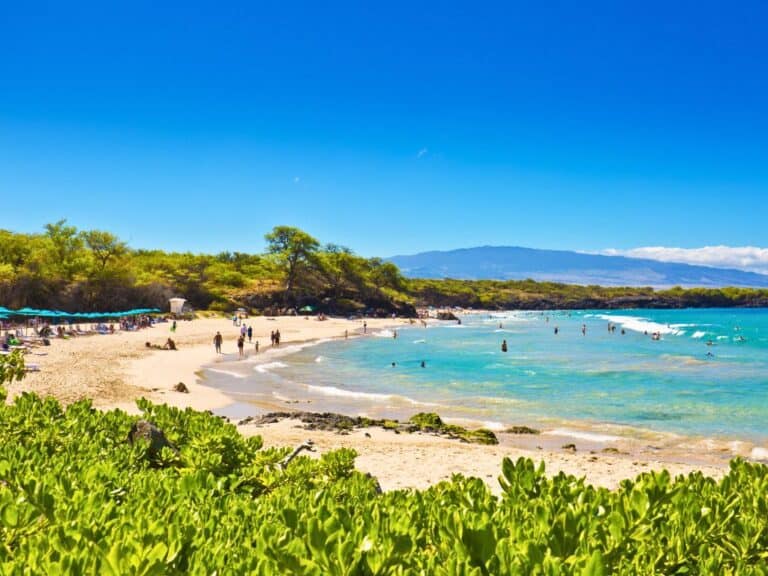
I saw my first rip current at Hapuna Beach and the lifeguards were constantly warning people about it.
The best advice for getting out/surviving rip currents is swimming parallel to the shore to get out of the current and/or ride the current out until it brings you to the end then swimming back to the beach at an angle away from the current.
Most deaths by rip currents happen due to panicking, so staying calm is your best defense.
Again, these are extreme circumstances and don’t happen to everyone, but accidents occur, unlike cliff jumping where you’re intentionally taking a risk…
Cliff Jumping

A famous pastime on the Big Island is cliff jumping at South Point. People from all over the world come to face their fear of heights and test their courage by jumping 40ft off a rock cliff into the clear aqua blue water below.
While most people jump without any issues, some can smack the water and injure themselves.
I can attest to jumping as straight as a pencil and still hit my tailbone so that it was painful for me to sit down for 3 weeks. I’ve also seen others belly flop and come up with the wind knocked out of them.
People have died jumping at South Point, often times from getting swept out to sea. Signs warn you to jump at your own risk and you should heed that warning.
Elsewhere on the island are other places people jump into waters. Use common sense about how deep the water is, where the rocks are, and what the currents are doing.
Be especially cautious after it rains…
Flash Floods
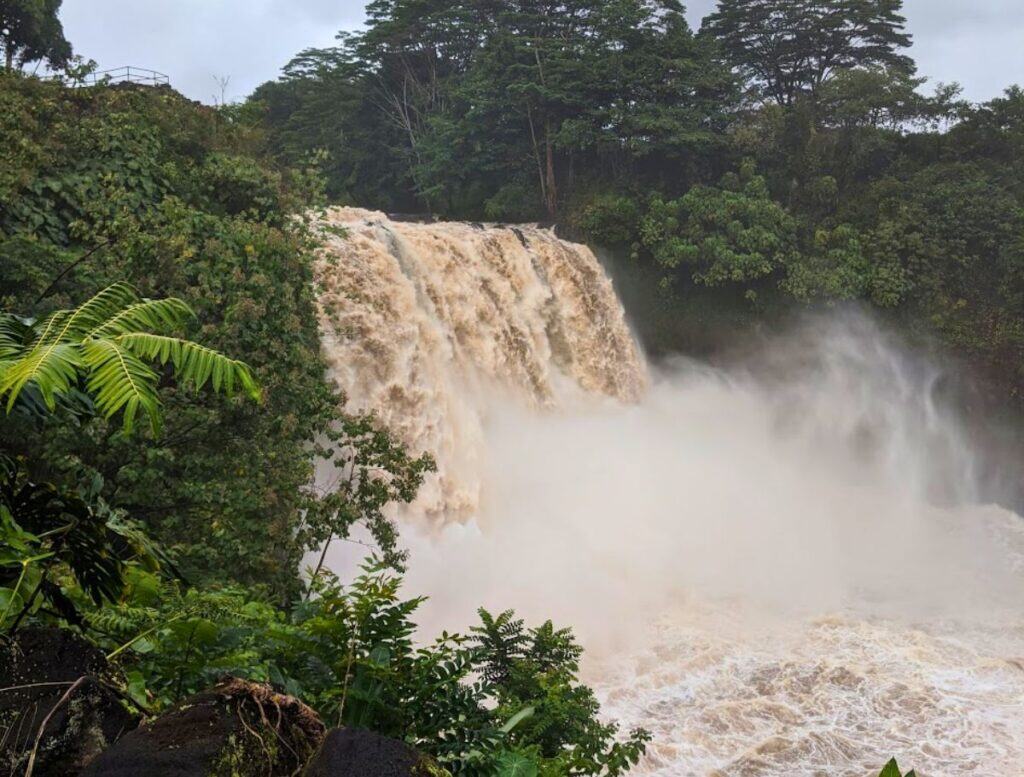
Heavy rains can cause flash floods to occur in rivers and streams and dried waterbeds, especially on the Hilo side. This is a tropical island afterall.
Do not go swimming in waterfalls and rivers after a heavy rainfall.
Flash floods can come unexpectedly downstream and carry you away, drowning or slamming you into boulders.
You’ll notice that after a rainstorm, waterfalls will gush brown water 2-3 times their normal size, not a force to be trifled with.
Also, do not be surprised to find road closures during heavy rainfall due to the roads being flooded.
Surprisingly, besides having to worry about “over hydration”, you also should be aware of dehydration…
Heat Stroke/Dehydration
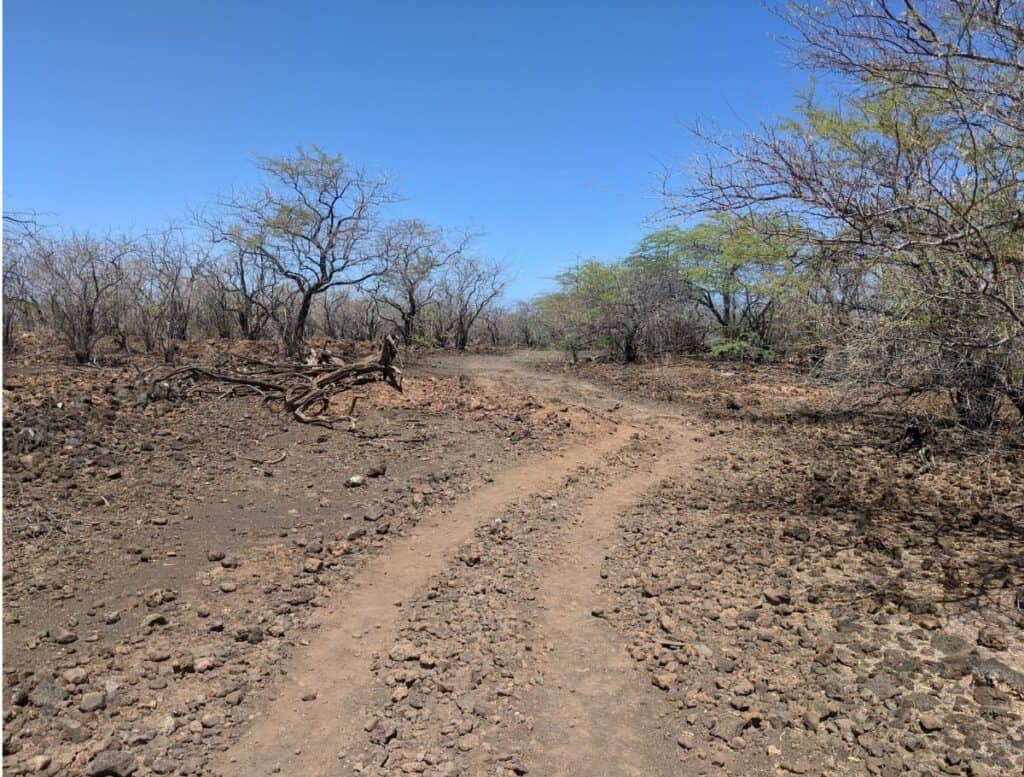
Depending on how you measure, the Big Island has 8 of the 13 climate zones, two of them being Dry Semi-Arid and Dry Arid, so desert.
Kona and all the way up north on the Kohala Coast can get extremely hot and dry (not what you’d expect on a tropical island).
Miles of lava fields with brown grass and dry kiawe trees create an Elephant Graveyard scenario: very little shade, little rain, and lava rocks cooking in the sun make for oven-like circumstances.
Staying hydrated and cool when you can is extremely important. You can easily and quickly get heat stroke if you aren’t careful. Bring hats, water, and any other sun protection while traversing the desert landscape, being sure not to overexert yourself.
I get heat stroke super easily, and this is my favorite water bottle to keep my water cold all day in the hot sun.
Just don’t fill it up with wild water…
Infections
Bacterial organisms live rampantly in the perfect Big Island environment of warmth and humidity. You can be exposed to them in lava rocks, ocean water, and river water. Staph infections in Hawaii happen twice as much as the rest of the country.
You might get lightly scraped by lava rock while hiking or in the water and the next day find an incredibly infected wound with goo everywhere. Best not to swim if you already have an open wound as well.
The best plan of attack if you do get a scrape is to be proactive and put some antibacterial cream on it right away and continue to baby it until you are confident the wound is healing.

Getting leptospirosis is also a risk if you enter hot springs or other bodies of fresh water on the island. Again, don’t go in if you have an open wound. Antibiotics can be prescribed if needed.
Natural Disasters
Earthquakes
The Big Island is ranked as one of the highest earthquake hazard locations in the US; not surprising due to the afore mentioned fact that there are four active volcanoes here.
Hawaii gets hit from earthquakes thousands of times a year. The island has three classes of earthquake:
- Volcanic (from magma moving underneath the surface)
- Tectonic (slippages of the plates along the earth’s fault lines)
- Mantle (the bending of the earth’s crust and upper mantle due to the crushing weight of the island)
While multiple earthquakes happen every day on the Big Island, most are not felt. The largest recorded earthquake on the Big Island was back in 1868 at 7.9.
Tsunamis
Islands are always susceptible to tsunamis as they could get hit from any side.
There have been over 160 tsunamis (9 of them fatal) in Hawaii since 1812, with 86% of the fatalities on the Big Island.
The most destructive tsunami was the one from the Aleutian Chain’s earthquake on April Fool’s Day in 1946 causing waves to reach 50ft high, killing about 159 people.
But even small tsunamis can cause some damage, like when the Tonga volcano erupted in January 2022 and a 3ft tsunami wave crashed into Kona, damaging thousands of dollars worth at Sea Quest’s retail store.
Tsunami evacuation route signs are everywhere along coastal communities and beaches have regular tsunami warning siren testings.
If you see the tide begin to go out rapidly and further than expected for low tide, that’s a sign a tsunami is probably coming and you should head to higher ground ASAP.
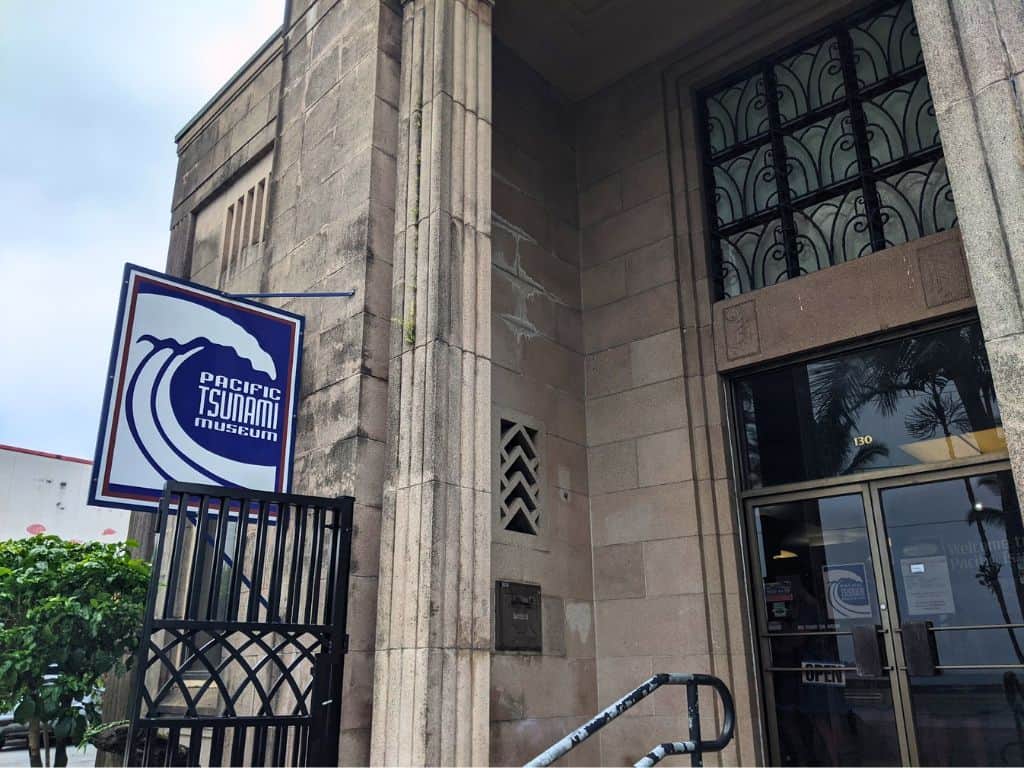
Learn more about tsunamis and their history at the Pacific Tsunami Museum in Hilo. A marker on the front doors indicates how high the waters came up from the 1946 tsunami.
So, Is the Big Island Safe?
So what do you think? Is the Big Island safe or dangerous for tourists?
I say, the Big Island has the potential for dangerous scenarios, but all in all, nothing is any more extreme than anywhere else in the world be it weather, nature, or criminals.
📍 Overwhelmed planning your Big Island trip?
I offer Big Island travel planning services based on your level of need:
✔️ Itinerary Review
✔️ Custom Travel Planning
✔️ One-on-One Video Consult
See How I Can Help You ➡️