Big Island Travel Guide: How to Plan Your First Trip

Planning your first trip to the Big Island?
I lived on the island for a year and spent most of my free time driving around it, chasing waterfalls, bumming on beaches, and stumbling across little roadside stops I never would’ve found on a map.
Because the island is so big and there’s so much to see and do, planning a trip here can feel a little overwhelming at first.
This Big Island travel guide will walk you through everything you need to know before visiting the Big Island for the first time, from where to stay and how to get around to the experiences you won’t want to miss.
🔍 Big Island at a Glance
Best airport: Kona (KOA)
Best area for first timers: Kona side
Minimum trip length: 5 days
Top experience: Manta ray snorkel
Must visit: Hawaii Volcanoes National Park
Where Is the Big Island and What Makes It Unique?

The Big Island is the island at the bottom of the Hawaiian chain and, as the name suggests, it’s big. Really big.
How Big Is the Big Island Anyway?
In fact, it’s larger than all the other Hawaiian islands combined.
The Big Island covers over 4,000 square miles, which means things are a lot more spread out than many first-time visitors expect.
Driving from Kona to Hilo can take 1.5-3hrs, depending on which direction you go.
If you go all the way around the island without stopping, you’re looking at about 6hrs.
So while it might not look that big on a map, it definitely doesn’t feel small when you’re exploring it.
Why the Big Island Feels So Different
On top of that, the biodiversity is insane.
In one day I’ve: lounged on a sunny beach, crossed a lava field that looks like the surface of the moon, hiked through a misty rainforest, and watched cattle grazing on ranch pastures.
It’s one of the things that makes exploring the island so fun!
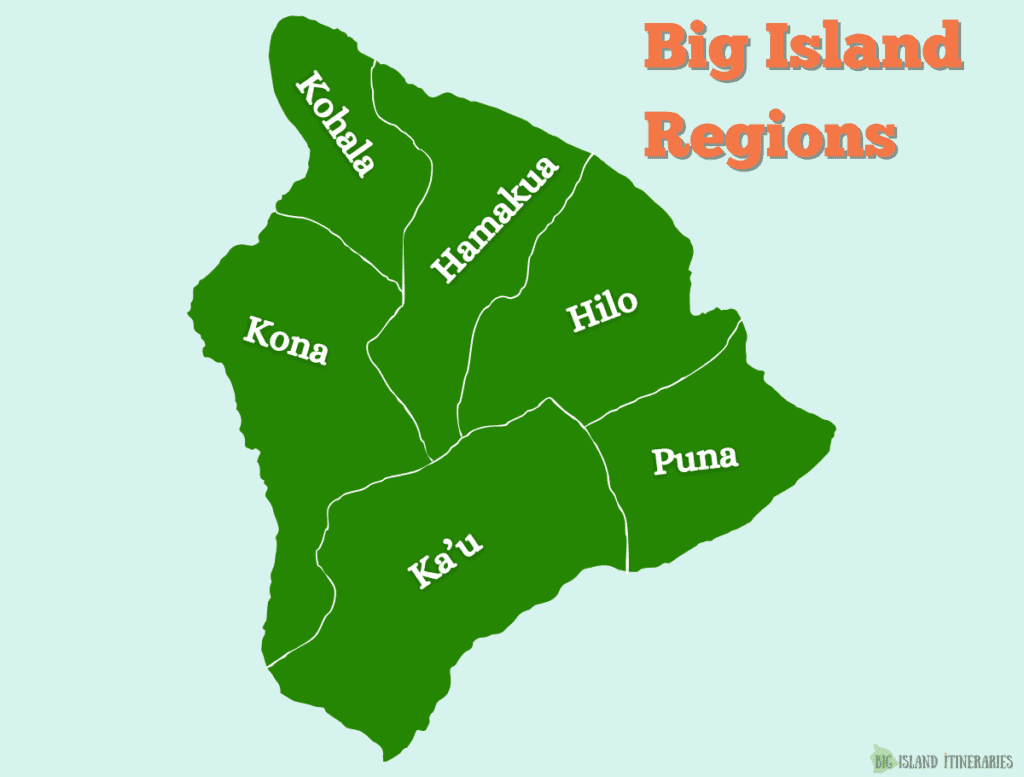
Regions of the Big Island
Kona
Kona is the sunny, dry side of the island and where most visitors end up staying. It’s known for its beaches, manta ray snorkels, coffee farms, and the main airport that most flights arrive into.
Hilo
Hilo is the lush, tropical side of the island where rain showers keep everything vibrant and green. It’s known for waterfalls and farm tours.
Kohala
The Kohala region stretches along the northwest side of the island and includes the resort areas of Waikoloa as well as the cooler ranch lands around Waimea. It’s known for white sand beaches, luxury resorts, and paniolo (Hawaiian cowboy) culture.
Ka’u
Ka’u is the southernmost point in the United States with a friendly mix of tropical and desert-y terrain. Here you’ll find black and green sand beaches, Kau coffee farms, and Hawaii Volcanoes National Park.
Hamakua
Hamakua is a lush stretch of ex-sugar plantations with dramatic gulches and eucalyptus forests. It’s known for Waipiʻo Valley and giant malasadas at Tex Drive In..
Puna
Puna feels wild and untamed compared to the rest of the island as it’s less developed. You’ll find places like Pohoiki Hot Springs, a nude black sand beach, and a lava tree park.
Best Time to Visit the Big Island
One of the nice things about visiting the Big Island is that there’s really no bad time to come.
Temperatures stay fairly consistent year-round, with daytime highs typically ranging from about 80°F in the winter to around 85°F in the summer, and evenings cooling into the upper 60s and low 70s.
Thanks to the island’s size and varied landscapes, the weather can be completely different depending where you are, so if there’s no sun in one area, drive to another.
That said, there are a few minor seasonal differences worth knowing before you choose your dates.
Winter (December–March)
Winter is one of the most popular times to visit Hawaii, especially if you’re escaping cold weather on the mainland or spending the holidays in the tropics. Tours and restaurants tend to be busier, and rental cars can sell out during peak travel weeks.
This is also whale watching season, when humpback whales migrate to Hawaiian waters. You can take a whale watching tour, but I often spot them breaching from shore too.
The tradeoff is that winter brings slightly more rain and larger ocean swells.
Spring (April–June)
Spring weather is usually great, the holiday crowds are gone, and the island feels a little more relaxed.
Ocean conditions are often good for snorkeling, and it’s a nice window before the busy summer travel season kicks in.
Summer (July–September)
Summer tends to be warmer and drier, especially on the Kona side of the island.
Ocean conditions are often calmer during these months, which makes it a great time for snorkeling and beach days.
The main downside is that summer vacations bring larger crowds to the island.
Fall (October–November)
Fall is one of the most underrated times to visit the Big Island. The weather is still warm, and things tend to feel quieter after the summer travel season.
The main thing to be aware of is the Ironman World Championship in Kona each October, when Kona gets extremely busy and roads close.
How Many Days Do You Need on the Big Island
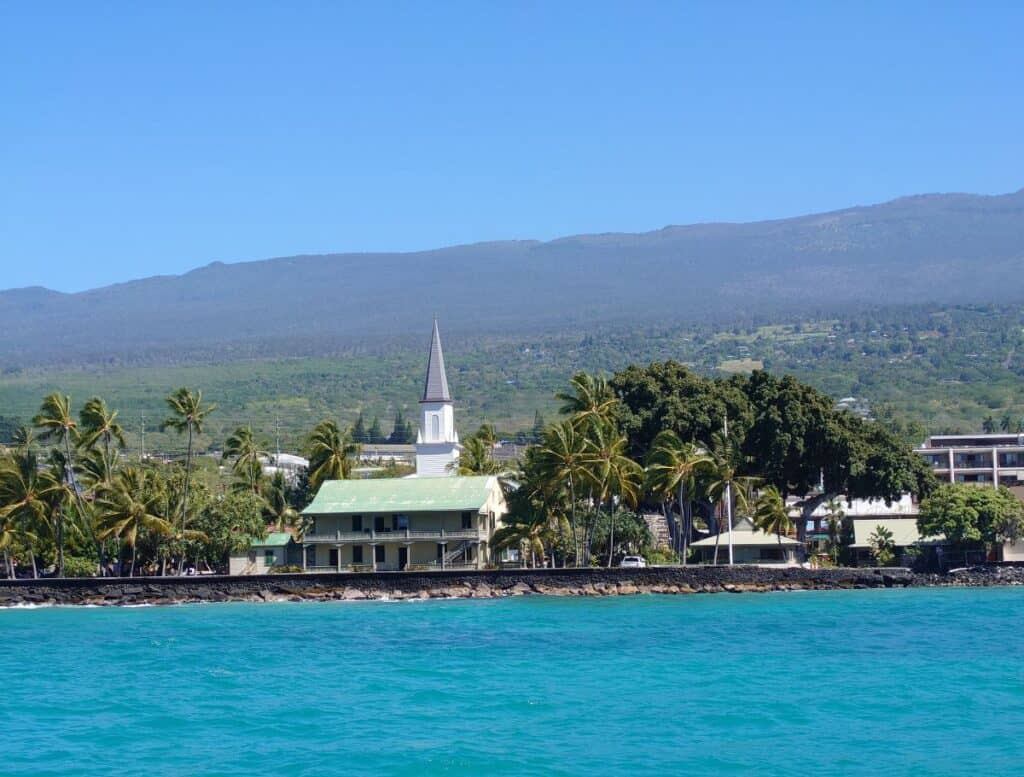
The age old question is: How many days do I need on the Big Island?
Well, I can tell you that I lived there for a year and that still wasn’t long enough lol!
Like I’ve said earlier, the island is massive, and things are spread out more than many first-time visitors expect. Because of that, you’ll spend a lot of time driving between regions which limits how much you can feasibly do in a day.
3–5 Days
If you only have a few days, you can still fit in some of the major highlights like Hawaii Volcanoes National Park, a few beaches, a coffee farm, and a manta ray snorkel.
Just know that your trip will feel a little rushed.
If you’re planning a shorter visit, you can follow my 3-day Big Island itinerary or 4-day Big Island itinerary to make the most of your time.
7-10 Days
This amount of time gives you some breathing room in your itinerary so you can comfortably explore both the Kona side and the Hilo side, take a few scenic detours, and stargaze on Mauna Kea.
If you have a full week, my 7-day Big Island itinerary lays out a balanced trip around the island, easily fitting in extra tours and beaches.
🔢 If you’re not sure how many days will work best for your trip, you can use my handy dandy calculator to help figure it out.
Where to Stay on the Big Island
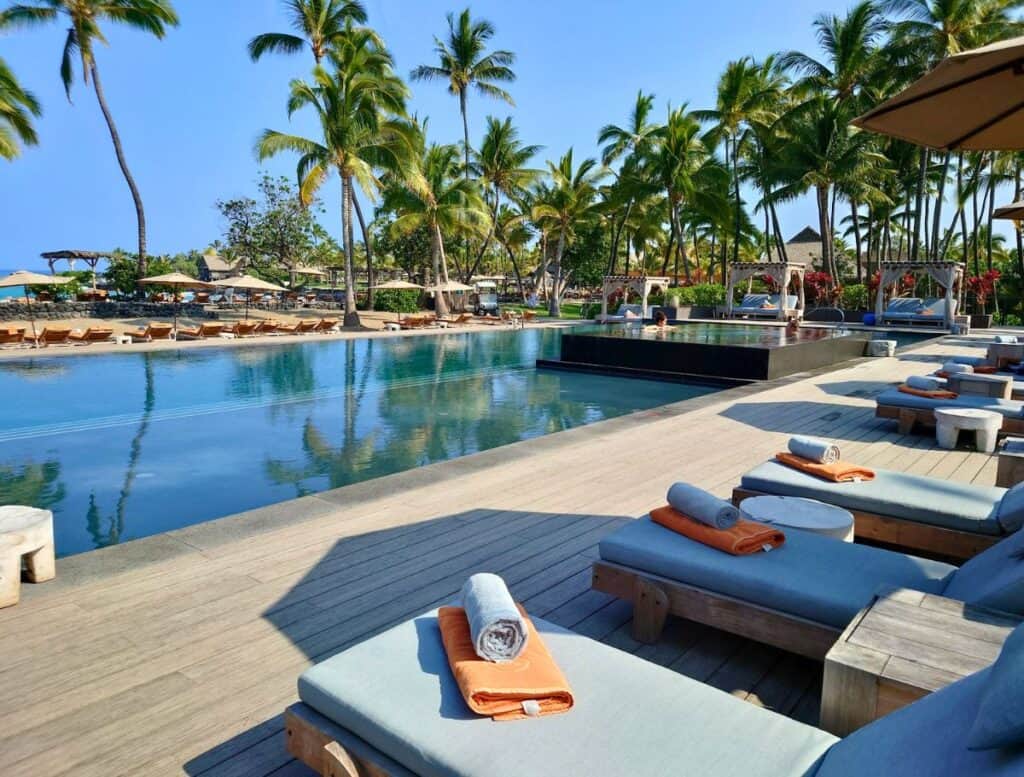
Once you decide on how many days you’ve got on the Big Island, the next big question is where you should stay?
Because the island is so large, location can make a big difference in how much time you spend driving. I like to be as efficient as possible when I travel, so picking a central base is key.
If you’re staying 7 days or more, it often makes sense to split your trip between Kona and Hilo so you can explore both sides of the island without constantly backtracking.
But the best choice really depends on what you want to see and do.
Best Area for First-Time Visitors
If this is your first time on the Big Island, you’ll probably want to stay in Kona or Waikoloa.
This side of the island is sunnier and puts you closer to popular beaches, relaxing resorts, shopping amenities, and boat tours.
Kona vs Hilo
As mentioned earlier, the biggest difference between Kona and Hilo is the weather. Kona sits on the western, drier side of the island, while Hilo on the east side receives more rain, althoughit’s usually at night while you’re sleeping.
Kona tends to be more tourist-oriented with beach access, tours, and plenty of restaurants.
Hilo has more of a “local” feel and is better suited for travelers who enjoy exploring on their own.
Something else to think about is proximity to attractions.
Kona gives you easier access to Waimea, the Kohala Coast, and Captain Cook, while Hilo puts you closer to the Hamakua Coast, Puna, and Hawaii Volcanoes National Park.
Resorts vs Vacation Rentals
The other thing to consider when choosing where to stay is not only location but accommodation style.
I appreciate staying at resorts because it really feels like a vacation.
Everything is in one place: restaurants, pools, cultural activities, and staff who can help with tours or recommendations.
Vacation rentals, on the other hand, are often more budget-friendly, especially for families, and honestly they’re usually what I end up booking.
They typically offer kitchens for cooking meals, more space to spread out, and many condo complexes have shared pools that still give you a little bit of that resort feel.
🛏️ I tend to check Expedia for resort bookings or VRBO for vacation rentals.
Getting Around the Big Island
Once you figure out where you’re staying, the next question is how you’re going to get around to all the fun activities.
Do You Need a Rental Car?
The short answer is: YES. You will need to rent a car for the Big Island.
The island is just too big and the public transport system is too limited to get you to where you’re gonna want to go.
Now, you could plunk yourself at a resort and rely on tour companies for transportation.
But the Big Island is so easy to explore on your own, and having a car gives you the freedom to stop at scenic viewpoints, hidden beaches, random coffee farms, and roadside fruit stands along the way.
🚗 I like Hawaii Discount Car Rental because they usually have the best rates plus include TWO extra FREE drivers.
Jeep or Convertible?
I’ve got a pretty controversial take on whether you should rent a Jeep or convertible on the Big Island.
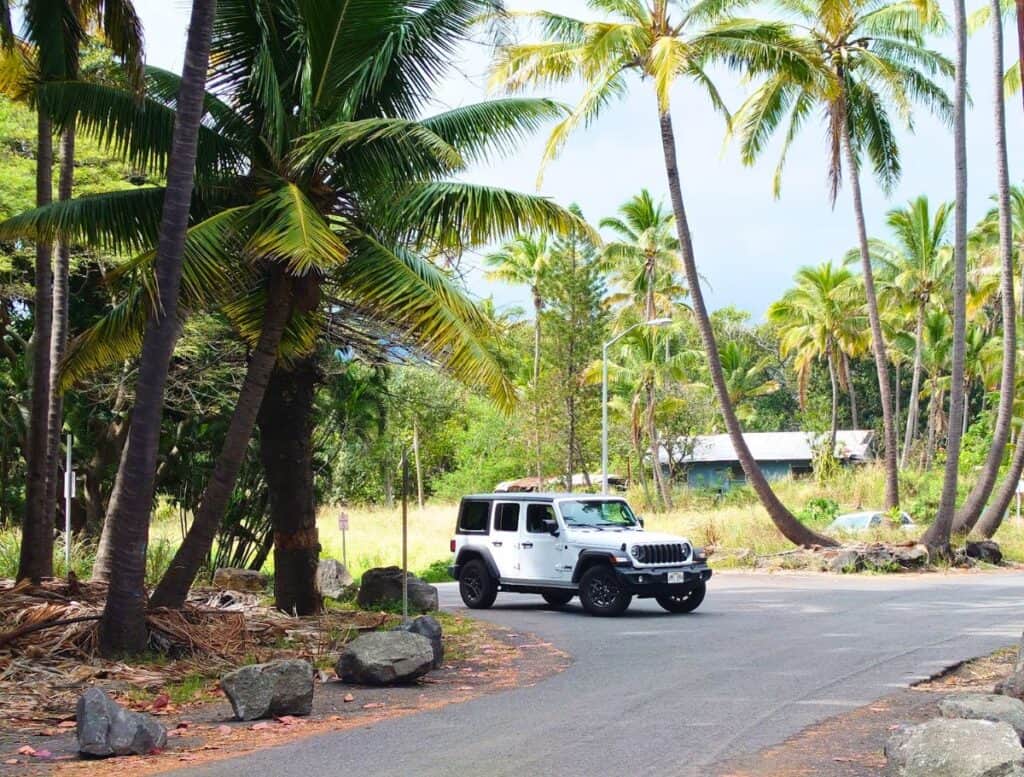
While a Jeep can be fun, it’s pretty unnecessary as the road system on the island is easily driven with a regular car.
A Jeep is really only necessary if you plan to drive rougher roads like Makalawena Beach or the summit road to Mauna Kea. Plus, locals don’t drive Jeeps, so you’ll flag yourself as a tourist everywhere you go.
Another option people consider is a convertible. But unless you’re sticking mostly to the sunny Kona side, you’ll likely be putting the top up and down as you drive through the island’s sporadic rain showers.
In reality, most people end up leaving the top up most of the trip, so the extra cost isn’t really worth it.
💁♀️ Tab’s Trip Tip: Book your rental car as soon as you book your trip, especially during busy seasons like Christmas and spring break. The island has limited car rental availablity, and when inventory gets low, prices get jacked up fast.
Driving Distances
Just to give you a quick overview of why a car is practically necessary, here’s a look at distances from Kona to major tourist points:
- Kona to Hilo: 77 miles
- Kona to Waikoloa: 25 miles
- Kona to Pu’uhonua O Honaunau National Historical Park: 22 miles
- Kona to South Point: 63 miles
- Kona to Hawaii Volcanoes National Park: 77 miles
- Kona to Waipio Valley: 61 miles
- Island Circle Drive: 266 miles (not including Puna or Mauna Kea)
Not exactly walking distances!
Best Things to Do on the Big Island
Now, there’s a ton of things to do on the Big Island that could keep you busy for weeks. These are some of the highlights most visitors don’t want to miss and experiences that are uniquely Big Island.
If you want a full breakdown, check out my guide to the best things to do on the Big Island, where I share even more ideas.
Hawaii Volcanoes National Park
Hawaii Volcanoes National Park is easily the celebrity star of the island. There’s nowhere else in the US where you have a chance to see active lava flow.
I’ve visited multiple times and still find new places to explore beyond the steam vents, craters, petroglyphs, and lava tube.

Snorkel with Manta Rays
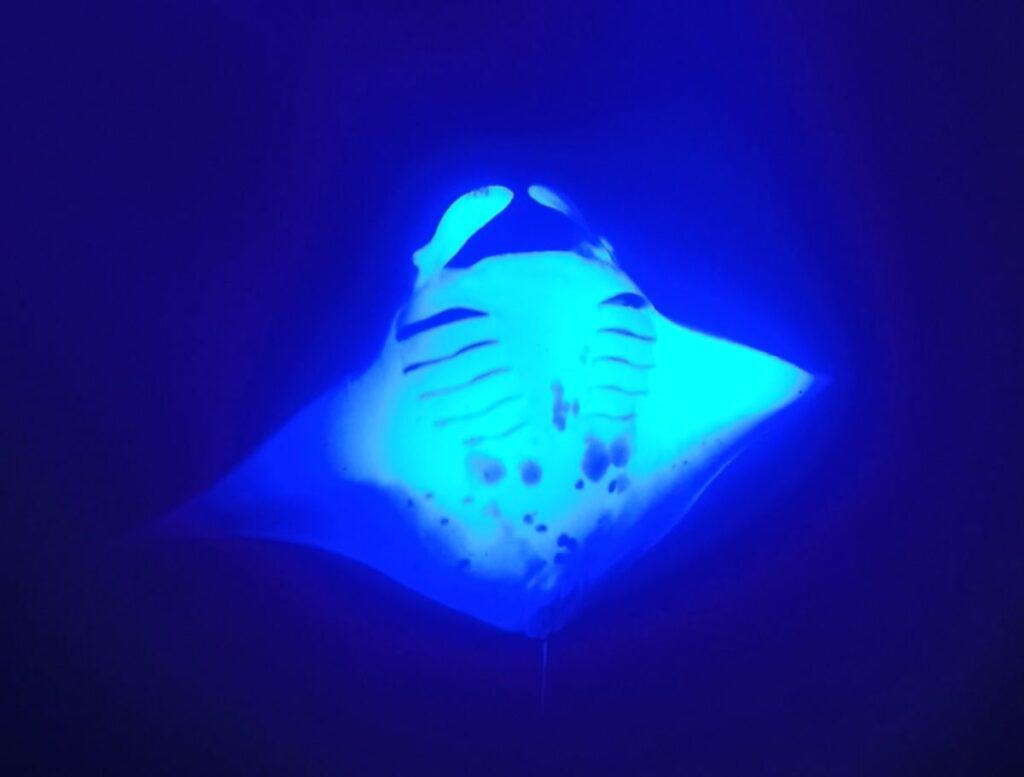
The manta ray night snorkel is one the #1 tour I recommend prioritizing because it’s the most unforgettable experience you can have on the Big Island.
The first time I did it, I literally screamed through my snorkel mask when the manta ray glided right toward my face with its wide open mouth. Watching these gentle giants somersault below you is something you’ll never forget.
Beach Bumming
One of the things I love about the Big Island is the variety of beaches to choose from.
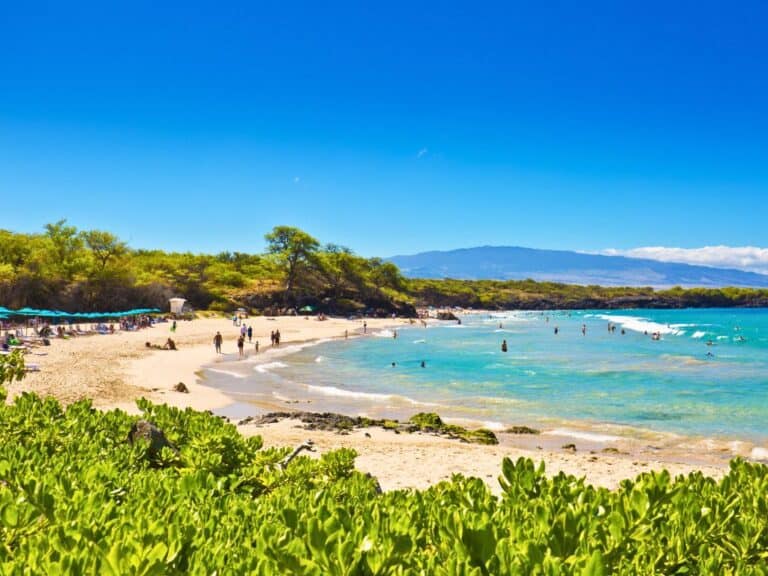
There’s expansive white sand beaches like Hapuna, black sand beaches like Punaluʻu where green sea turtles hang out, and even a rare green sand beach if you’re up for the adventure.
Tour a Kona Coffee Farm
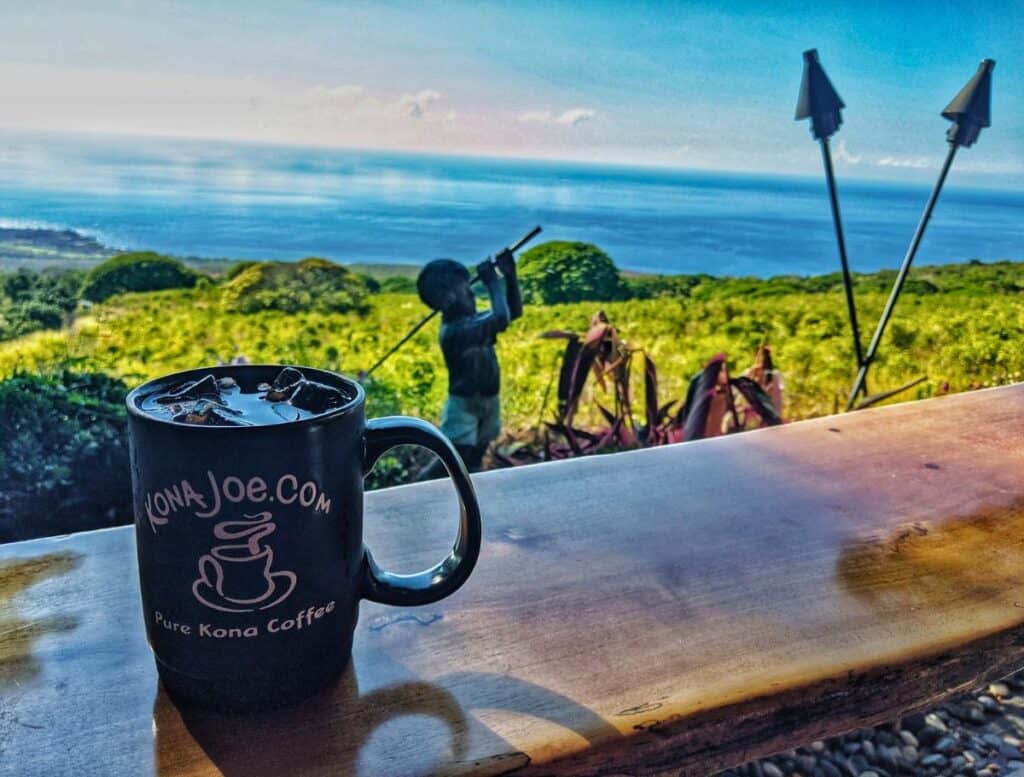
Kona coffee is some of the most famous coffee in the world, and visiting a coffee farm is one of my favorite things to do.
A coffee farm tour lets you walk through the coffee orchards, learn about the roasting process, and sample different brews. I’m a bit of a coffee snob myself, but I haven’t been on a bad tour yet.
Stargazing on Mauna Kea
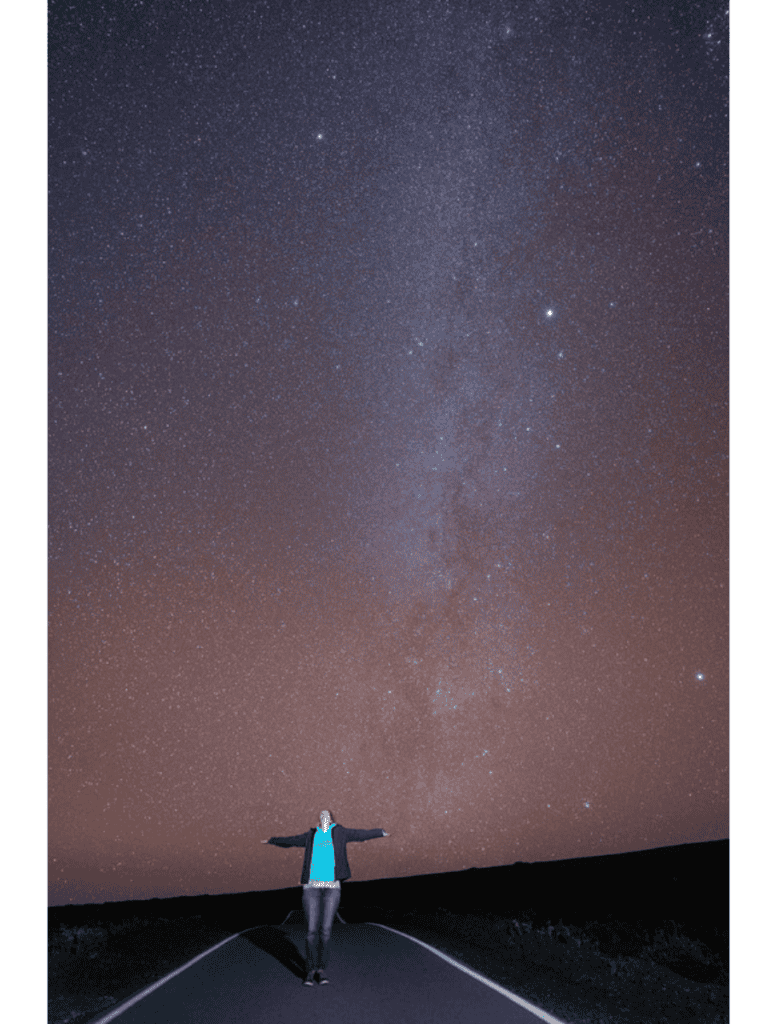
Mauna Kea is one of the best places on Earth for stargazing thanks to its high elevation and incredibly clear skies sans light pollution.
The first time I went on a stargazing tour up there, I had never seen so many stars in my life. It almost looked like someone had spilled glitter across the sky.
Chase Waterfalls
If you love waterfalls, the Hilo side of the island is where you’ll want to spend some time.
Some waterfalls are quick roadside stops while others require a short hike, and there are even a few where you can swim.
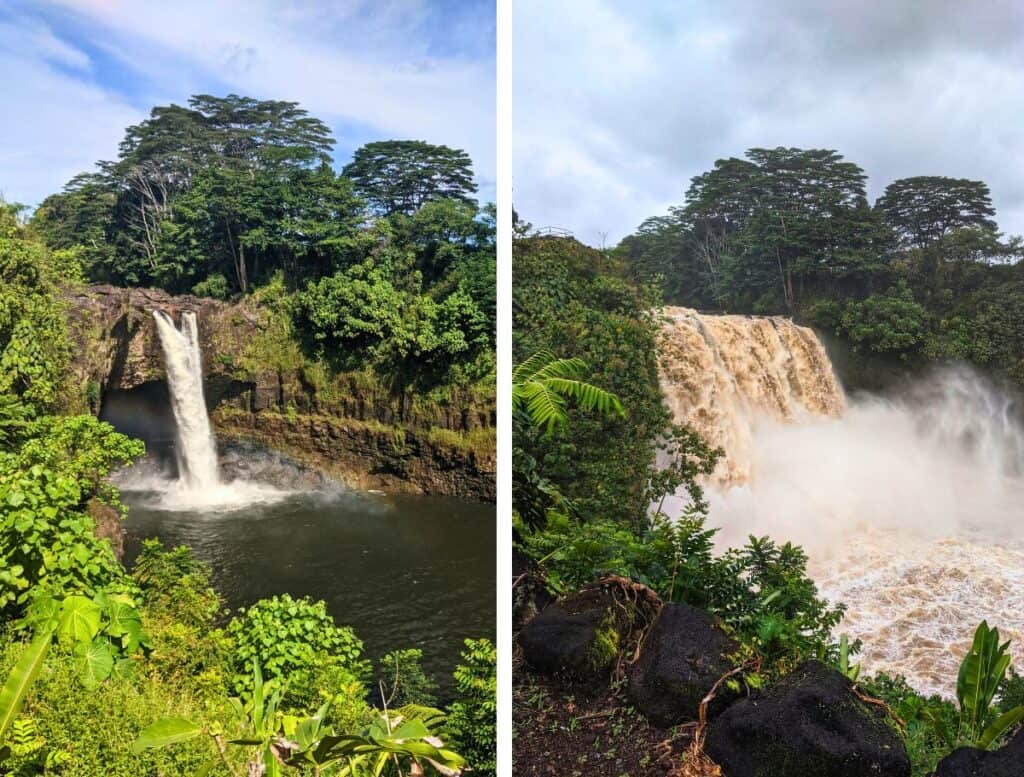
Unfortunately, most of the good ones require entry fees now and some aren’t worth it (I’m looking at you Rainbow Falls!).
📍🗺️ Get my Big Island Things to Do Map for easy access to sites already pinned in your Google maps! Grab it here!
Local Foods to Try on the Big Island

Okay, if you don’t seek out local cuisine when you travel, are you even traveling right? lol!
Here are some Hawaiian favorites to keep an eye out for:
Malasadas
Malasadas are fried Portuguese donuts rolled in sugar or stuffed with jelly and often served hot. They’re basically my kryptonite.
Where to find it:
- Punalu’u Bake Shop
- Tex Drive In
Poke
Poke is cubed raw fish, usually ahi tuna, seasoned and served over rice or by itself. It’s one of the freshest and most iconic foods you can try in Hawaii.
Where to find it:
- Da Poke Shack
- Poke and Sides
Kona Coffee
Kona coffee is world famous for its smooth flavor and lower acidity compared to many international beans. If you love coffee, trying it fresh on the island is a must (cuz trust me, it tastes different on the mainland).
Where to find it:
- Kona Mountain Coffee
- HiCo
Huli Huli Chicken
Huli huli chicken is sweet and smoky Hawaiian-style barbecue chicken that’s usually cooked on large roadside grills (literally roadside).
Where to find it:
- Randy’s
- Gj’s
Loco Moco
Loco moco is a classic local comfort food made with rice, a hamburger patty, brown gravy, and a fried egg on top.
Where to find it:
- Hawaiian Style Cafe Hilo
- Ken’s House of Pancakes
Shave Ice
Shave ice is finely shaved ice topped with fruity syrups and sometimes condensed milk or haupia cream.
Where to find it:
- Original Big Island Shave Ice Co. (OBISC)
- Kula Shave Ice
Join thousands of other visitors and locals to discover the best things to do on the Big Island!
🌺 New activities posted daily
🌺 Upcoming events not to miss
🌺 Ask questions about your trip
Lau Lau
Lau lau is pork (and/or butterfish) wrapped in taro and ti leaves and steamed until tender.
Where to find it:
- Kaloaa’s Super J’s
Musubi
Spam musubi is a simple snack made with rice, grilled spam, and wrapped seaweed.
Where to find it:
- Matsuyama Food Mart
- L&L Hawaiian Barbecue
Biggest Mistakes First-Time Visitors Make on the Big Island

While there aren’t many ways to completely mess up your trip, there are a few common mistakes I see first-timers make once boots are on the ground that are easy to avoid.
Underestimating Ocean Conditions
You’ve heard the phrase “Never turn your back to the ocean”? Yeah, well, heed it!
The ocean around Hawaii is powerful and conditions can change quickly.
Strong waves can knock people off their feet, and spinal injuries from shore break are unfortunately not uncommon.
Most beaches have lifeguards who keep warning signs updated with information about rip currents, wave conditions, and even shark sightings, so always check them before getting in the water.
Leaving Valuables in Your Car
Unfortunately, car break-ins do happen here, especially at roadside trailheads. The best rule is to not leave anything visible in your car.
Take any valuables with you or leave them at your hotel room.
If you’re on your last day with luggage in tow, consider leaving it with your hotel’s front desk or with a participating business of Bounce, a daily luggage storage service.
Waiting Too Long to Book Tours
For the most part, you’ll be okay with last minute tour bookings, but there are certain companies that sell out weeks in advance.
So if there’s a particular whale watching company you want to use, farm tour you want to visit, or dinner event you want to attend, book as soon as you know your dates so you don’t risk missing out.
Driving Roads Your Rental Car Isn’t Allowed On
Remember how I said you don’t need a Jeep on the Big Island? Well, if you do end up renting one, make sure your rental agreement actually allows you to drive everywhere you plan to go.
Most people don’t realize that most rental car companies don’t even allow you to go to the popular spots on the island that require 4WD, like Mauna Kea.
If something happens to the vehicle in these areas, your rental car insurance typically won’t cover the damage, which means you could be responsible for the full cost.
Trusting Weather Apps Too Much
Weather apps can make it look like the entire island is going to be rainy all day, but that’s rarely how it actually works here.
Rain showers are often quick and very localized. It can be pouring in one area while it’s sunny just a few miles away.
Unless an actual storm system is moving through, it’s usually best to keep your plans and adjust as you go.
If you do end up with a rainy afternoon, there are still plenty of great things to do in Kona and Hilo when it rains.
Ignoring Warning Signs and Barriers
If you see warning signs or barriers, they’re there for a reason.
Just because you see other people crossing them doesn’t mean it’s safe. Some areas are dangerous and restricted due to unstable cliffs, volcanic hazards, or because the land is private property.
Every year visitors get seriously injured, and some have even died after ignoring posted warnings. So please, don’t be a touron.
Need Help Planning Your Big Island Trip?
Are you still feeling overwhelmed planning your trip to the Big Island?
Between deciding where to stay, figuring out driving distances, and choosing which tours are actually worth it, there’s a lot to sort through.
If you’d rather have a little expert guidance, I offer video chat travel consultations where we can walk through your itinerary together and make sure everything flows smoothly.
I’m want your trip planning to be exciting, not stressful!
🌺 You can learn more about my Big Island travel consultations here.